
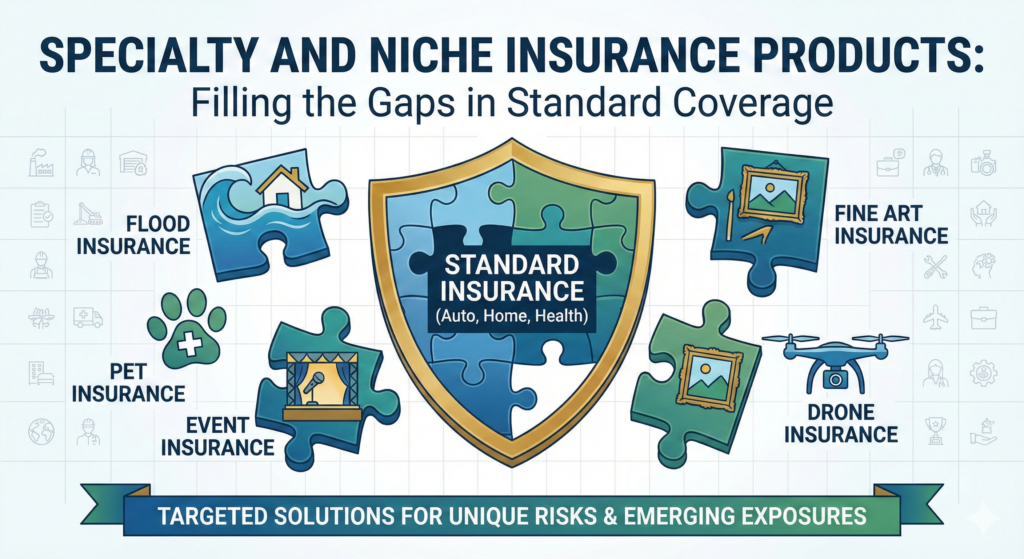
Insurance is often associated with common coverage types such as auto, home, health, or life insurance. However, beyond these standard categories lies a broad and evolving segment of the market known as specialty and niche insurance products.
Specialty insurance is designed to address unique, uncommon, or highly specific risks that are not adequately covered by standard insurance policies. As industries evolve, technologies advance, and lifestyles change, new forms of risk emerge. Specialty insurance fills the gaps left by traditional coverage.
Understanding specialty and niche insurance products helps individuals and businesses recognize when additional protection may be appropriate.
What Is Specialty Insurance?
Specialty insurance refers to coverage designed for specific exposures that fall outside conventional policy structures. These products are often tailored to unique professions, assets, activities, or risk environments.
Unlike standard policies that serve broad populations, specialty insurance typically focuses on narrower segments with distinct risk characteristics.
For example:
- Flood insurance for properties in high-risk flood zones
- Event insurance for weddings or corporate gatherings
- Pet insurance for veterinary expenses
- Fine art insurance for valuable collections
Each product addresses a particular risk profile that requires customized underwriting and policy design.
Why Specialty Insurance Exists
Standard insurance policies contain exclusions and limitations. These exclusions are necessary because insurers must manage risk pools effectively and price coverage sustainably.
When certain risks are too specific, too variable, or too costly to include in standard policies, specialty coverage becomes necessary.
Common reasons specialty insurance products exist include:
- Geographic risks (such as flood-prone areas)
- High-value assets
- Emerging technologies
- Unique professions
- Event-based exposures
As risk landscapes evolve, insurers develop specialized products to meet new demands.
Examples of Specialty and Niche Insurance Products
Specialty insurance spans many industries and personal circumstances. Below are some notable examples.
Flood Insurance
Standard homeowners insurance policies typically do not cover flood damage. Flood insurance is often purchased separately, particularly in regions prone to flooding.
Coverage may include damage to:
- Structural components
- Electrical systems
- Appliances
- Personal property
Flood insurance is particularly relevant in coastal or river-adjacent areas.
Earthquake Insurance
In regions with seismic activity, earthquake insurance provides protection against structural damage resulting from earthquakes.
Like flood coverage, earthquake insurance is generally not included in standard homeowners policies.
Event Insurance
Event insurance provides coverage for specific occasions such as:
- Weddings
- Conferences
- Corporate gatherings
- Public festivals
It may cover cancellation, liability claims, or property damage related to the event.
Event-based coverage is temporary and tailored to a defined timeframe.
Pet Insurance
Pet insurance helps cover veterinary expenses related to accidents or illnesses.
Policies vary widely in terms of deductibles, reimbursement rates, and coverage limits.
As pet ownership increases, demand for structured veterinary cost protection has grown.
Professional Malpractice Insurance
Certain professions require specialized liability coverage beyond general liability insurance.
Examples include:
- Medical malpractice insurance
- Legal malpractice insurance
- Real estate professional liability
These policies address professional negligence claims specific to regulated occupations.
Fine Art and Valuable Items Insurance
High-value assets such as artwork, jewelry, collectibles, or rare items may exceed the coverage limits of standard homeowners policies.
Specialty insurance provides:
- Agreed value coverage
- Protection against theft and damage
- Customized appraisal-based limits
This type of insurance ensures that unique assets are adequately protected.
Directors and Officers (D&O) Insurance
Directors and officers insurance protects corporate leaders from personal financial liability arising from decisions made in their official roles.
It may cover legal defense costs and settlements related to claims from shareholders, employees, or regulators.
D&O insurance is particularly relevant for corporations, startups, and nonprofit organizations.
Product Recall Insurance
Product recall insurance helps businesses manage the financial consequences of recalling defective products from the market.
It may cover:
- Notification expenses
- Disposal costs
- Public communication
- Replacement expenses
This coverage is especially relevant for manufacturers and distributors.
Aviation and Marine Insurance
Businesses or individuals involved in aviation or maritime activities require highly specialized coverage due to unique operational risks.
Standard insurance policies typically do not cover aircraft or marine vessels adequately.
These sectors rely on tailored underwriting and industry-specific expertise.
Emerging Niche Insurance Products
As technology advances, new specialty insurance products continue to emerge.
Examples include:
- Drone insurance
- Cryptocurrency asset coverage
- Media liability insurance
- Climate risk insurance
- Parametric insurance products
Innovation in digital assets and climate-related exposures is reshaping the specialty insurance market.
How Specialty Insurance Is Underwritten
Because specialty insurance involves unique risks, underwriting is often more detailed and individualized.
Insurers may evaluate:
- Industry-specific risk factors
- Geographic exposure
- Asset valuation documentation
- Operational practices
- Historical claims data
Premiums reflect the complexity and specificity of the insured risk.
Specialty policies may also include customized endorsements and tailored coverage language.
Who Should Consider Specialty Insurance?
Specialty insurance may be appropriate for individuals or businesses that:
- Own unique or high-value assets
- Operate in high-risk industries
- Conduct specialized professional services
- Host events
- Live in high-risk geographic areas
Rather than purchasing coverage reactively, it is advisable to assess potential exposures proactively.
Limitations and Considerations
Specialty insurance policies may include:
- Higher deductibles
- More detailed documentation requirements
- Narrower definitions of covered events
- Custom exclusions
Because policies are highly tailored, reviewing terms carefully is essential.
Understanding coverage scope prevents gaps or misunderstandings.
Specialty Insurance and Risk Management Strategy
Specialty insurance should complement, not replace, broader insurance planning.
For example:
- A homeowner in a flood-prone area may combine homeowners insurance with flood coverage
- A technology company may combine general liability, cyber insurance, and D&O coverage
Layered insurance strategies provide comprehensive protection across multiple risk categories.
The Role of Brokers in Specialty Insurance
Because specialty insurance products are highly customized, brokers and advisors often play an important role.
They may assist with:
- Risk assessment
- Policy comparison
- Negotiating tailored coverage terms
- Ensuring compliance with contractual requirements
Expert guidance can help align specialty coverage with specific needs.
The Future of Specialty Insurance
As industries evolve, specialty insurance will continue expanding.
Trends influencing growth include:
- Digital transformation
- Climate-related risks
- Regulatory changes
- Growth of remote and gig economies
- Expansion of emerging technologies
Specialty insurance adapts to emerging exposures faster than traditional broad-market policies.
Conclusion
Specialty and niche insurance products address risks that standard policies often exclude. From flood and earthquake insurance to event coverage and directors and officers liability, these tailored solutions fill critical protection gaps.
Understanding specialty insurance allows individuals and businesses to build comprehensive protection strategies aligned with their specific risk profiles.
As economic activities and technologies evolve, specialty insurance will remain an essential part of modern risk management — offering targeted solutions for increasingly complex environments.