
Insurance is designed to protect you financially — but only if it is set up correctly.
Many people assume they are covered, only to discover too late that their policy does not work the way they expected. These mistakes can result in significant out-of-pocket costs, denied claims, or financial stress.
Understanding the biggest insurance mistakes that cost people thousands can help you avoid common pitfalls and make smarter decisions about your coverage.
This guide breaks down the most frequent and costly insurance errors — and how to avoid them.
This article is for informational purposes only and does not constitute financial, legal, or insurance advice.
Why Insurance Mistakes Are So Expensive
Insurance problems often appear only when you need to file a claim.
At that moment:
- Policy details matter
- Exclusions become relevant
- Limits are tested
Mistakes made when choosing or managing insurance can have serious financial consequences later.
The Most Expensive Insurance Mistakes
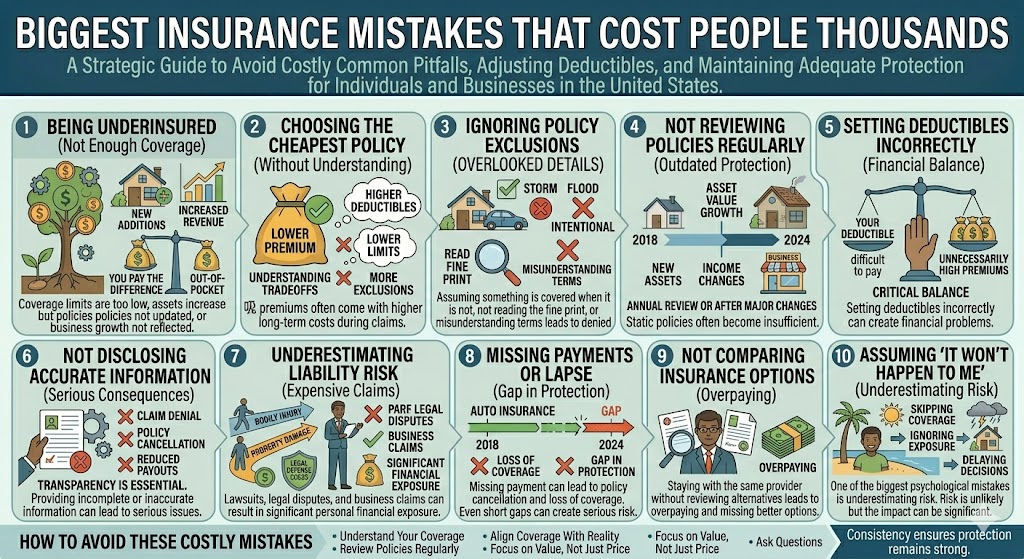
1. Being Underinsured
One of the most common and costly mistakes is not having enough coverage.
This may happen when:
- Coverage limits are too low
- Assets increase but policies are not updated
- Business growth is not reflected in coverage
The result:
- You pay the difference out of pocket
2. Choosing the Cheapest Policy Without Understanding It
Low premiums can be attractive, but they often come with trade-offs.
These may include:
- Higher deductibles
- Lower coverage limits
- More exclusions
What seems like savings can turn into higher costs during a claim.
3. Ignoring Policy Exclusions
Exclusions define what is not covered — and they are often overlooked.
Common issues include:
- Assuming something is covered when it is not
- Not reading the fine print
- Misunderstanding policy terms
This can lead to denied claims.
4. Not Reviewing Policies Regularly
Life and business situations change, but many policies remain the same for years.
This can lead to:
- Outdated coverage
- Missing protection
- Paying for irrelevant features
Regular reviews are essential.
5. Setting Deductibles Incorrectly
Choosing the wrong deductible can create financial problems.
- Too high → difficult to pay during a claim
- Too low → unnecessarily high premiums
The balance is critical.
6. Not Disclosing Accurate Information
Providing incomplete or inaccurate information when applying for insurance can lead to serious issues.
Possible consequences include:
- Claim denial
- Policy cancellation
- Reduced payouts
Transparency is essential.
7. Failing to Understand Liability Risk
Many people underestimate how expensive liability claims can be.
Examples include:
- Accidents involving others
- Legal disputes
- Business-related claims
Low liability limits can result in significant personal financial exposure.
8. Missing Payments or Letting Policies Lapse
A missed payment can lead to:
- Policy cancellation
- Loss of coverage
- Gaps in protection
Even short gaps can create serious risk.
9. Not Comparing Insurance Options
Staying with the same provider without reviewing alternatives can lead to:
- Overpaying
- Missing better coverage options
- Inefficient policies
Comparison helps ensure value.
10. Assuming “It Won’t Happen to Me”
One of the biggest psychological mistakes is underestimating risk.
This mindset can lead to:
- Skipping important coverage
- Ignoring potential exposures
- Delaying insurance decisions
Risk may be unlikely — but the impact can be significant.
Real-World Example
Consider a small business owner who purchases basic liability insurance.
Over time:
- The business grows
- Revenue increases
- Client contracts become larger
However, coverage remains unchanged.
When a claim occurs:
- The policy limit is exceeded
- The owner must cover the remaining costs
This situation could have been avoided with a simple policy review.
How to Avoid These Costly Mistakes
1. Understand Your Coverage
Take time to review:
- What is included
- What is excluded
- Policy limits
2. Review Policies Regularly
At least once a year or after major changes.
3. Align Coverage With Reality
Ensure policies reflect your current situation.
4. Focus on Value, Not Just Price
The cheapest option is not always the best.
5. Ask Questions
If something is unclear, seek clarification before making decisions.
The Hidden Cost of “Small” Mistakes
Some insurance mistakes may seem minor, but their impact can be significant.
Examples include:
- Slightly lower coverage limits
- Small misunderstandings of policy terms
- Minor gaps in coverage
These can lead to large financial consequences in the right circumstances.
The Strategic Perspective
Avoiding insurance mistakes is not just about preventing loss — it is about making better decisions.
A well-structured insurance approach helps:
- Protect assets
- Reduce uncertainty
- Improve financial stability
- Support long-term planning
For businesses, it can also enhance credibility and resilience.
Final Thoughts
Insurance is one of the most important financial tools available — but only when used correctly.
The biggest mistakes are often not obvious until it is too late. By understanding common pitfalls and taking a proactive approach, you can avoid unnecessary costs and ensure that your coverage works when it matters most.
Making informed decisions today can prevent significant financial losses in the future.