
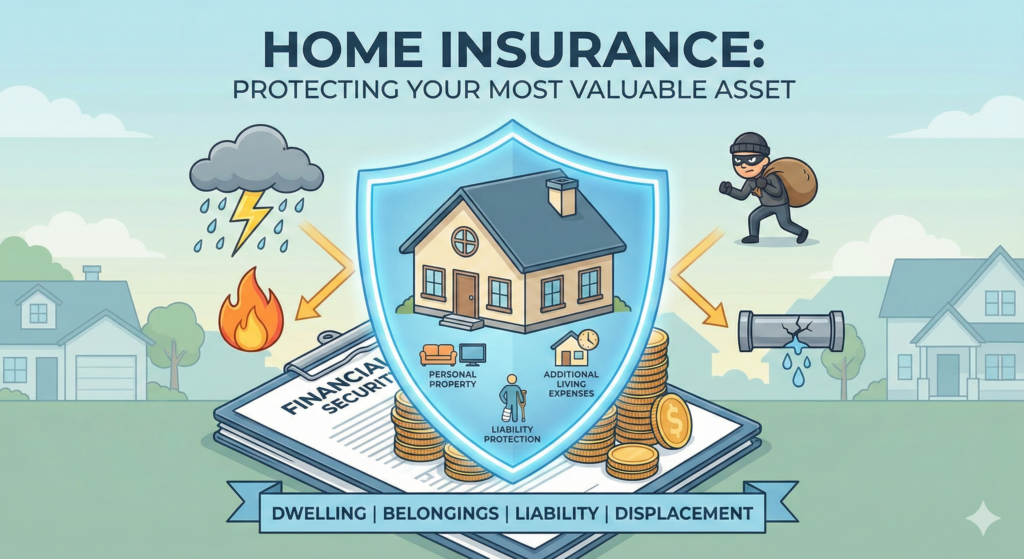
Home insurance, also known as homeowners insurance, is one of the most important forms of financial protection for property owners in the United States. For most people, a home is the largest single investment they will ever make. Protecting that investment from unexpected events is not just practical — it is essential.
While mortgage lenders typically require home insurance, its value goes far beyond meeting loan conditions. Home insurance provides protection against property damage, liability risks, and temporary displacement due to covered events. Understanding how it works allows homeowners to make informed decisions and avoid coverage gaps that could have serious financial consequences.
What Home Insurance Covers
A standard homeowners insurance policy generally includes several categories of protection. Although specific details vary between insurers and policies, most coverage falls into the following areas:
1. Dwelling Coverage
Dwelling coverage protects the physical structure of the home itself. This includes walls, roof, foundation, built-in appliances, and attached structures such as garages.
If the home is damaged by a covered event — such as fire, wind, or certain natural disasters — dwelling coverage helps pay for repairs or rebuilding costs.
It is important to note that coverage is typically based on replacement cost, not market value. Replacement cost refers to what it would take to rebuild the home at current construction prices, which may differ significantly from its resale value.
2. Other Structures Coverage
This portion of the policy covers detached structures on the property, such as:
- Fences
- Sheds
- Detached garages
- Guest houses
Coverage limits for other structures are usually a percentage of the dwelling coverage amount.
3. Personal Property Coverage
Personal property coverage protects belongings inside the home, including furniture, electronics, clothing, and household items.
If these items are damaged or stolen due to a covered event, the policy may provide compensation. Some policies offer actual cash value coverage (which factors in depreciation), while others provide replacement cost coverage.
High-value items such as jewelry, collectibles, or specialized equipment may require additional endorsements for full protection.
4. Liability Protection
Liability coverage is one of the most important components of home insurance. It protects homeowners if someone is injured on their property or if the homeowner is legally responsible for causing damage to others.
For example, if a visitor slips and falls on an icy walkway, liability coverage may help cover medical expenses and legal costs.
In a legal environment where lawsuits can result in significant financial exposure, liability coverage plays a critical role.
5. Additional Living Expenses (ALE)
If a covered event makes the home temporarily uninhabitable, additional living expenses coverage helps pay for temporary housing, meals, and other necessary costs.
This protection ensures that homeowners can maintain stability while repairs or rebuilding are underway.
What Home Insurance Does Not Cover
Understanding exclusions is just as important as understanding coverage.
Standard home insurance policies typically do not cover:
- Flood damage
- Earthquake damage
- Normal wear and tear
- Maintenance issues
- Pest infestations
Flood and earthquake coverage often require separate policies or endorsements. Reviewing exclusions carefully helps prevent unexpected coverage gaps.
How Home Insurance Premiums Are Determined
Several factors influence home insurance premiums:
- Location and local risk factors
- Home age and construction type
- Roof condition
- Replacement cost
- Claims history
- Selected coverage limits and deductibles
Homes located in areas prone to natural disasters or high crime rates may have higher premiums. Similarly, older homes with outdated systems may be considered higher risk.
Insurers use data and underwriting models to assess the likelihood and severity of potential claims.
Deductibles and Coverage Limits
Home insurance policies include deductibles — the amount the homeowner must pay before insurance coverage applies.
Higher deductibles generally lower premiums, while lower deductibles increase them. Choosing a deductible requires considering financial preparedness in case of a claim.
Coverage limits determine the maximum payout for each category of protection. Ensuring that limits align with realistic rebuilding and liability exposure is critical.
The Importance of Accurate Replacement Cost
One of the most common misunderstandings in home insurance is confusing market value with replacement cost.
Market value includes land value and real estate conditions. Replacement cost focuses solely on rebuilding the structure at current material and labor prices.
Underinsuring a home based on incorrect estimates can result in significant out-of-pocket costs after a major loss.
The Claims Process in Home Insurance
If damage occurs, the homeowner should:
- Document the damage with photos and records
- Notify the insurance company promptly
- Provide requested documentation
- Work with adjusters during the evaluation process
Claims are assessed based on policy terms, coverage limits, and deductibles. Maintaining accurate records of home contents can simplify the claims process.
Home Insurance and Mortgage Requirements
Mortgage lenders typically require homeowners insurance as a condition of financing. This protects the lender’s financial interest in the property.
However, lender-required coverage may not address all personal risk exposures. Homeowners should review policies independently to ensure comprehensive protection.
The Role of Technology in Home Insurance
Technology has improved how homeowners manage insurance. Many insurers offer:
- Digital policy access
- Online claims filing
- Home inventory tools
- Risk monitoring systems
Smart home devices, such as leak detectors and security systems, may also reduce risk and influence premiums.
Digital platforms increase transparency and streamline communication between insurers and homeowners.
Why Home Insurance Is a Long-Term Protection Strategy
Owning a home involves long-term responsibility. Weather events, accidents, and liability risks can arise unexpectedly.
Home insurance provides a structured way to manage these uncertainties. It supports financial stability by reducing the potential impact of major losses.
Rather than viewing it as an annual obligation, homeowners should consider insurance part of their overall financial planning strategy.
Conclusion
Home insurance is a foundational component of responsible homeownership in the United States. It protects the physical structure of the home, personal belongings, and liability exposure while providing temporary support during disruptions.
Understanding dwelling coverage, personal property protection, liability limits, deductibles, and exclusions helps homeowners make informed decisions. When selected thoughtfully, home insurance provides more than compliance — it provides long-term financial resilience and stability.