
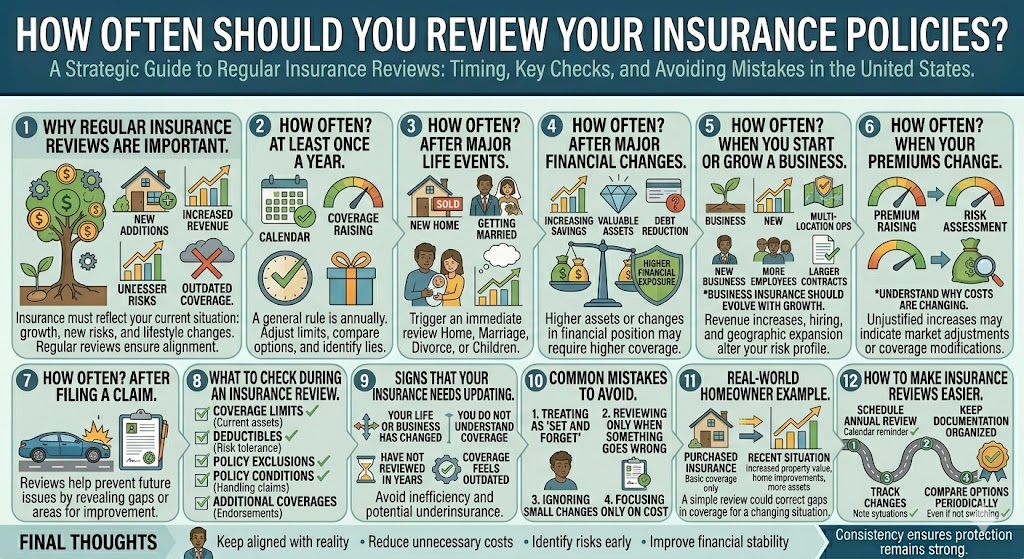
Insurance is not something you set once and forget. As your life, finances, or business evolve, your insurance policies should evolve as well.
However, many individuals and business owners fail to review their policies regularly. This can lead to outdated coverage, unnecessary costs, or gaps in protection that only become visible when a claim occurs.
Understanding how often you should review your insurance policies — and what to look for during that process — is essential for maintaining effective and efficient protection.
This article is for informational purposes only and does not constitute financial, legal, or insurance advice.
Why Regular Insurance Reviews Are Important
Insurance is designed to reflect your current situation.
Over time, changes may include:
- Increased income or assets
- Business growth
- New risks or exposures
- Changes in regulations
- Lifestyle changes
If your policy does not keep up with these changes, it may no longer provide adequate protection.
Regular reviews help ensure that your coverage stays aligned with reality.
How Often Should You Review Your Insurance Policies?
1. At Least Once a Year
A general rule is to review your policies annually.
This allows you to:
- Adjust coverage limits
- Identify unnecessary costs
- Compare with other options
- Ensure everything is up to date
Annual reviews provide a structured way to stay in control.
2. After Major Life Events
Certain life events should trigger an immediate review.
Examples include:
- Buying a home
- Getting married or divorced
- Having children
- Significant income changes
These events can significantly affect your insurance needs.
3. After Major Financial Changes
Changes in financial position often require adjustments.
This may include:
- Increased savings or investments
- New assets
- Debt changes
Higher financial exposure may require higher coverage.
4. When You Start or Grow a Business
Business-related changes can quickly alter your risk profile.
Review your insurance if:
- You launch a new business
- Revenue increases
- You hire employees
- You expand operations
Business insurance should evolve with growth.
5. When Your Premiums Change
A noticeable increase in premiums is a good reason to review your policy.
This may indicate:
- Changes in risk assessment
- Market adjustments
- Coverage modifications
It is important to understand why costs are changing.
6. After Filing a Claim
A claim can reveal:
- Coverage gaps
- Policy limitations
- Areas where protection can improve
Reviewing your policy after a claim helps prevent future issues.
What to Check During an Insurance Review
1. Coverage Limits
Ensure that your limits reflect:
- Current assets
- Income level
- Business exposure
Low limits may lead to underinsurance.
2. Deductibles
Evaluate whether your deductible:
- Matches your financial capacity
- Aligns with your risk tolerance
Adjusting deductibles can optimize cost vs protection.
3. Policy Exclusions
Exclusions define what is not covered.
Review them carefully to avoid surprises.
4. Policy Conditions
Conditions affect how claims are handled.
Check:
- Reporting requirements
- Documentation needs
- Compliance obligations
5. Additional Coverages
Consider whether you need:
- New endorsements
- Additional policies
- Expanded protection
Signs That Your Insurance Needs Updating
1. Your Life or Business Has Changed
Any major change may require a policy update.
2. You Do Not Fully Understand Your Coverage
If you are unsure what your policy includes, it may need review.
3. You Have Not Reviewed It in Years
Long periods without review often lead to inefficiencies.
4. Your Coverage Feels Outdated
Policies should reflect current risks, not past situations.
Real-World Example
Consider a homeowner who purchased insurance several years ago.
Since then:
- Property value increased
- Home improvements were made
- Personal assets grew
Without reviewing the policy:
- Coverage limits may be too low
- Certain improvements may not be covered
A simple review could correct these gaps.
Common Mistakes to Avoid
1. Treating Insurance as “Set and Forget”
This is one of the most common mistakes.
2. Reviewing Only When Something Goes Wrong
Waiting until a claim occurs is too late.
3. Ignoring Small Changes
Small changes over time can create significant mismatches.
4. Focusing Only on Cost
Reviews should consider both cost and protection.
The Strategic Perspective
Regular insurance reviews are not just about maintenance — they are about optimization.
They help:
- Keep coverage aligned with reality
- Reduce unnecessary costs
- Identify risks early
- Improve long-term financial stability
For businesses, regular reviews are also part of professional risk management.
How to Make Insurance Reviews Easier
1. Schedule Annual Reviews
Set a reminder once a year.
2. Keep Documentation Organized
Having all policies in one place simplifies the process.
3. Track Changes in Your Situation
Note any major changes that may affect coverage.
4. Compare Options Periodically
Even if you do not switch providers, comparing helps ensure competitiveness.
Final Thoughts
Insurance policies should evolve alongside your life and business.
Reviewing them regularly helps ensure that your coverage remains relevant, efficient, and effective.
A proactive approach to insurance reviews can prevent gaps, reduce unnecessary costs, and improve overall protection.
Rather than treating insurance as a static decision, it should be viewed as an ongoing process — one that supports your long-term financial and operational goals.