
Liability insurance is a foundational component of both personal and business risk management. While many people associate insurance with protecting physical property, liability insurance focuses on something equally important: legal responsibility.
In simple terms, liability insurance protects individuals and businesses from financial losses if they are held legally responsible for causing injury or damage to another person or their property.
In the United States, where legal claims can result in substantial financial consequences, liability insurance plays a critical role in preserving financial stability.
Understanding how liability insurance works — and the different types available — helps individuals and organizations manage exposure in an increasingly complex legal environment.
What Liability Insurance Covers
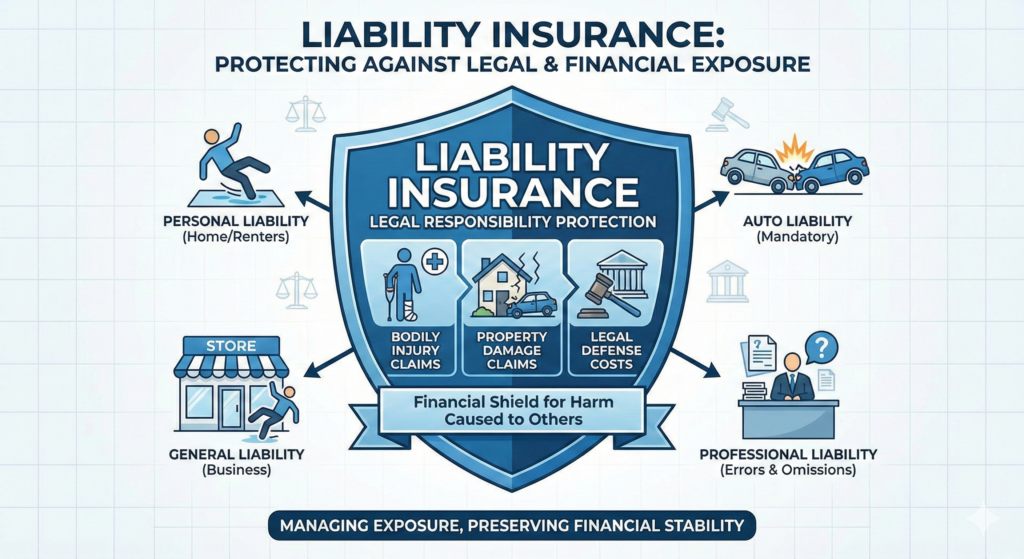
Liability insurance generally covers three main categories of expenses:
- Bodily injury claims
- Property damage claims
- Legal defense costs
If someone alleges that you or your business caused harm — whether physical injury or property damage — liability insurance may help cover:
- Medical expenses
- Repair or replacement costs
- Legal fees
- Court judgments or settlements (up to policy limits)
Importantly, legal defense costs alone can be significant, even if the claim ultimately lacks merit. Liability insurance helps manage that financial risk.
Why Liability Insurance Is Important
Modern society involves constant interaction — driving, owning property, running a business, offering professional services, or even hosting guests at home. Each interaction carries potential liability exposure.
Without liability insurance, individuals or businesses may need to pay legal costs and damages directly from personal or corporate assets.
Liability insurance does not eliminate legal risk, but it creates a structured framework for managing it.
Types of Liability Insurance
Liability insurance exists in several forms, depending on context and exposure.
Personal Liability Insurance
Personal liability coverage is commonly included in homeowners and renters insurance policies.
It protects individuals if someone is injured on their property or if they accidentally cause damage to another person’s property.
For example:
- A guest slips and falls at your home
- Your child accidentally damages a neighbor’s property
Personal liability coverage may help pay medical expenses and legal costs.
Auto Liability Insurance
Auto liability insurance is legally required in most U.S. states. It covers:
- Bodily injury to others caused by a vehicle accident
- Property damage to another person’s vehicle or property
It does not cover damage to your own vehicle — that requires additional coverage such as collision insurance.
Because traffic accidents are a common source of liability claims, auto liability insurance is essential for drivers.
General Liability Insurance (Business)
General liability insurance is one of the most common types of business insurance. It protects companies from third-party claims involving:
- Bodily injury
- Property damage
- Advertising injury
For example, if a customer is injured at a store or claims financial harm from advertising materials, general liability coverage may respond.
Many landlords and commercial contracts require businesses to carry general liability insurance.
Professional Liability Insurance
Professional liability insurance, also known as errors and omissions (E&O) insurance, protects professionals who provide advice or services.
This coverage applies when clients allege:
- Negligence
- Inaccurate advice
- Failure to deliver services as expected
It is commonly used by consultants, attorneys, technology providers, healthcare professionals, and financial advisors.
Professional liability addresses risks that arise from expertise-based services rather than physical interactions.
Product Liability Insurance
Businesses that manufacture, distribute, or sell products may face claims if those products cause harm.
Product liability insurance covers legal and financial exposure related to defective or harmful products.
In industries involving physical goods, this coverage can be critical.
Umbrella Liability Insurance
Umbrella insurance provides additional liability coverage beyond the limits of underlying policies such as home or auto insurance.
It acts as a secondary layer of protection when primary coverage limits are exhausted.
Individuals with significant assets often consider umbrella coverage to enhance liability protection.
Coverage Limits and Deductibles
Liability insurance policies include coverage limits that define the maximum amount the insurer will pay for covered claims.
Selecting appropriate limits requires considering potential exposure. In severe cases, medical costs and legal settlements can exceed minimum policy limits.
Some liability policies include deductibles, while others primarily focus on limit structures.
Understanding policy limits ensures that coverage aligns with realistic risk exposure.
What Liability Insurance Does Not Cover
Liability insurance typically does not cover:
- Intentional wrongdoing
- Criminal acts
- Contractual liabilities beyond policy terms
- Damage to your own property (unless specifically included)
Policies also contain exclusions and conditions that must be carefully reviewed.
Clear understanding of policy language reduces the likelihood of disputes during claims.
The Claims Process in Liability Insurance
If a claim arises, the insured should:
- Notify the insurance provider promptly
- Provide documentation and evidence
- Cooperate with legal defense processes
The insurer generally investigates the claim, determines whether it falls within coverage, and manages legal representation if necessary.
One of the most valuable aspects of liability insurance is access to legal defense resources.
How Insurers Evaluate Liability Risk
Insurance companies assess liability risk based on:
- Personal or business history
- Nature of activities
- Industry classification
- Claims history
- Location
For businesses, operational practices and safety protocols can influence underwriting decisions.
For individuals, driving history and property conditions may affect liability-related premiums.
Liability Insurance in a Digital Environment
As society becomes increasingly digital, liability exposure has expanded.
Businesses may face online defamation claims, data privacy allegations, or advertising disputes. Professional liability and cyber-related endorsements may address these risks.
The evolution of digital commerce and remote services has reshaped liability landscapes.
Insurance continues to adapt to these changes.
Liability Insurance as Asset Protection
Liability claims can threaten personal savings, business revenue, and long-term financial stability.
Liability insurance serves as a financial buffer, protecting assets from unexpected legal exposure.
Rather than focusing solely on required minimums, individuals and businesses should consider how liability coverage fits into broader financial planning.
Reviewing Liability Coverage Regularly
Life events and business growth can change liability exposure.
Examples include:
- Purchasing property
- Starting a business
- Expanding operations
- Hiring employees
- Acquiring significant assets
Periodic policy reviews help ensure that liability protection remains adequate.
Conclusion
Liability insurance protects against one of the most significant financial risks individuals and businesses face: legal responsibility for harm or damage.
From personal liability coverage in homeowners policies to professional liability insurance for service providers, each type serves a specific purpose.
Understanding coverage limits, exclusions, and policy structure allows policyholders to manage legal exposure responsibly.
When integrated into a comprehensive risk management strategy, liability insurance provides financial stability and peace of mind in an environment where legal claims are an ongoing possibility